About
I used to keep a small newspaper clipping folded in my wallet. It was about conservationist Jane Goodall’s early life, including—most importantly to me at that time—how she’d once worked as a waitress to save up for her ocean passage to Kenya, where she would begin the famous chimpanzee studies that transformed our understanding of primate cognition. Like thousands of other girls, I’d grown up wanting to be like the late Jane Goodall. I chased that dream earnestly: a degree in ecology, a minor in psychology, a plan to study animal behavior in a faraway forest.
While applying to graduate schools in the late 1990s to study primatology, like Jane, I waited tables. It was a night job. By day, I worked as a zookeeper dishing out pelletized monkey chow and scrubbing concrete floors spattered with animal poop at Monkey Jungle, a private roadside attraction in Miami, Florida—close to primates, yes, but far from the life I’d imagined. I quickly discovered that I didn’t like the hands-on labor, and, more disturbingly, the conditions in which some animals were kept, including the main attraction, a male gorilla named King living in isolation. Monkey Jungle’s refusal to transfer King to Zoo Atlanta’s gorilla colony drew the attention of Goodall herself, who wrote letters urging his relocation, and of animal rights activists led by TV personality Bob Barker, who stood outside the gates waving placards that read, “Let King Go!”
This was not a place where I wanted to work, but I still hoped to gain experience with primates to improve my chances of getting into a graduate school to study them in the wild. So when shortly after starting the zoo job, a PhD researcher at Florida International University who ran the nonprofit Dumond Conservancy for Primates and Tropical Forests, next door to Monkey Jungle, invited me to volunteer on her orangutan behavior study, I happily turned in my khaki uniform and took extra shifts at the restaurant to pay the bills.
It was pure joy spending time with Ray, a five-year-old ape. We were conducting a classic cognition experiment designed to test whether an animal can recognize itself. The premise is simple: place a mirror in front of Ray and observe whether he treats the reflection as someone else—or understands it as his own image. Decades of research show that a small collection of intelligent species—notably great apes, elephants, dolphins, and African grey parrots—pass the test. They use the mirror as a tool for investigating parts of their bodies they normally can’t see.
Ray left little doubt. He hooked his finger at the corner of his mouth to inspect his teeth, craned his neck to study the top of his hairy head, hung upside down to examine his reflection from new angles—and checked out his genitals. Watching him, I felt I was witnessing not just intelligence but a rich inner life: curiosity, self-awareness, and a quiet sense of agency that demanded respect.
This experience crystallized something in me. I didn’t just want to study animals, or write academic papers read only by scientists. I wanted to tell stories to the wider public, exposing the people and systems exploiting wildlife and harming the environment, and I wanted to help protect animals like orangutans and the fragile worlds they inhabit.
So instead of pursuing a PhD in primatology, I got a masters degree in science, health, and environmental journalism at NYU. More than two decades later, I’m still writing articles that educate the public about threats to wildlife and the environment—and inspire real-world impact. Over the years reporting on six continents, I’ve built a career that blends staff editing with extensive freelance work for a wide range of outlets, from National Geographic and the Washington Post to Rolling Stone, Mother Jones, and Audubon.
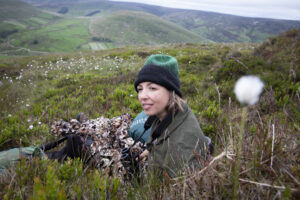
My coverage often takes me to places where wonder and exploitation exist side by side. In Africa, I’ve sat on the forest floor, watching wild lowland gorillas scarf termites like Skittles, even as I investigated the bushmeat trade driving wildlife populations into steep decline. In Japan, I soaked in a hot spring where a wild snow monkey waded in, steam rising from her fur, while in nearby villages other macaques were being trapped to perform in circus acts. I’ve dived into the oceans to spy on octopuses threatened by overfishing, listened to the trumpeting of imperiled cranes in Israel’s Hula Valley, and marveled at 10-foot crocodiles, hunted for luxury leather, sunning themselves along Australian riverbanks. I’ve joined scientists tracking everything from threatened jaguars in Belize to moose in a Wyoming wilderness. In England, I wore camouflage to secretly observe gamekeepers suspected of shooting protected raptors soaring overhead. In Trinidad, people told me—half joking, half serious—that the endangered scarlet ibises I’d admired roosting in the mangroves don’t taste like chicken (or fish) and that one ibis alone wouldn’t be enough for a proper curry. I’ve explored the hidden lives of many other creatures, from tiny bees and slippery eels to whales, wolves, and grizzlies—all facing human threats.
In all of this, I’ve learned the lesson that Jane Goodall told so well: to understand what’s at stake, you have to go where the story lives—stay long enough to listen—and then share it widely. As a journalist, that means holding both truths at once: bearing witness to the damage humans inflict on the natural world while also making space, now and then, to pause and simply marvel at its beauty.
That philosophy led me to join with former National Geographic editors Oliver Payne and Rachael Bale to launch Wildlife Investigative Reporters & Editors (WIRE). Again and again in our work, we’ve seen how wildlife exploitation thrives in the shadows: When crimes are normalized, accountability is weak. Few publications have the resources to not only report these stories but also bring them to life in vivid photography and film for audiences who may never venture into a rainforest or dive into the ocean. We created WIRE to do exactly that—to investigate the forces destroying wildlife and ecosystems and to publish rigorous, independent stories that compel attention and spur change. I believe, wholeheartedly, that the need for this work has never been greater. From illegal trade and habitat destruction to corruption and regulatory failure, these realities are at the heart of the biodiversity crisis.
All life on Earth is interconnected. The speed at which humans are obliterating nature is not only a crisis for wildlife–it’s a direct threat to our own survival. The dangerous trajectory is shaped by decisions made, and not made, right now, a reality that puts the responsibility—and opportunity—squarely in our hands.
As Jane Goodall, who generously served as an advisor to WIRE before her passing last year, said: “You cannot get through a single day without having an impact on the world around you. What you do makes a difference, and you have to decide what kind of difference you want to make.” That belief guides the work we do at WIRE.